

TRANRY: Your Professional Tractor manufacturer!
Products have been exported to more than 30 countries and regions including Brazil, Chile, Argentina, South Africa, Australia, Russia, Ukraine, Kazakhstan, Egypt, Algeria, Pakistan, and Poland.
Rich Experience
We have been engaged in agricultural machinery manufacturing since 1999, with 24 years of manufacturing, sales and export experience. The factory area exceeds 90,000 square meters, 6 complete production lines and more than 80 experienced employees provide support for our production.
Professional Agricultural Machinery
Our products are mainly various tractors with power ranging from 8HP to 300HP. We also supply other agricultural machinery and equipment, including backhoe loaders, excavators, trailers, diggers, planters, harvesters, sprayers, plows, rakes, etc.
One-Stop Service
Our R&D, technology, service and after-sales teams will provide professional, energy-saving and reliable product solutions during your purchase process. Service staff are online 24 hours a day to provide professional one-stop services to customers in the agricultural field.
Product Quality Assurance
We follow a strict quality management system and have passed industry implementation standards such as ISO14000, ISO9001, GJB9001-2001A, etc., so that the safety and reliability of our products are guaranteed. Quality inspection specialists will also inspect every production link.
-
![Mini Power Tiller: Safe Operation Rules & Complete Buying Guide For Vineyard & Vegetable Farm]()
-
![220HP Heavy-Duty Tractor Fits Various Farm Implements For Multifunctional Farming]()
-
![TR2004 200HP 4WD Heavy Duty Farm Tractor]()
TR2004 200HP 4WD Heavy Duty Farm Tractor
Add to Inquiry -
![180HP Four-Wheel Drive Wheeled Tractor]()
180HP Four-Wheel Drive Wheeled Tractor
Add to Inquiry -
![TR160HP Wheel Tractor]() Add to Inquiry
Add to Inquiry -
![TR140 HP 4WD Tractor | Your Top Procurement Choice For Heavy-Duty Efficiency & Full Process Control]()
-
![130 HP 4×4 Wheeled Tractor - High-Efficiency Main Agricultural Model, Factory Direct Supply]()
-
![120HP Tractor | A High-Power, Durable And Versatile Agricultural Workhorse]()
-
![110HP 4WD Farm Tractor - The Top Choice For High-Efficiency Operation On Large Farms And Plots]()
-
![100HP Farm Tractor]() Add to Inquiry
Add to Inquiry -
![TR90 Horsepower Medium-Sized Wheel Tractor]()
TR90 Horsepower Medium-Sized Wheel Tractor
Add to Inquiry -
![TR 80HP 4×4 Wheeled Tractor | Master All Tough Field Work Effortlessly]()
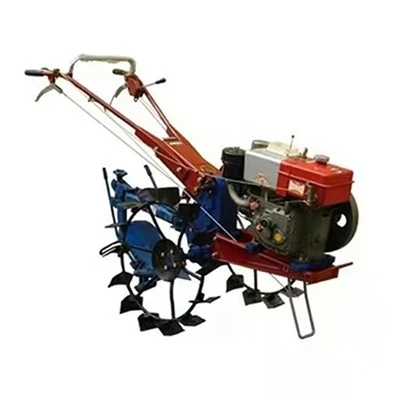

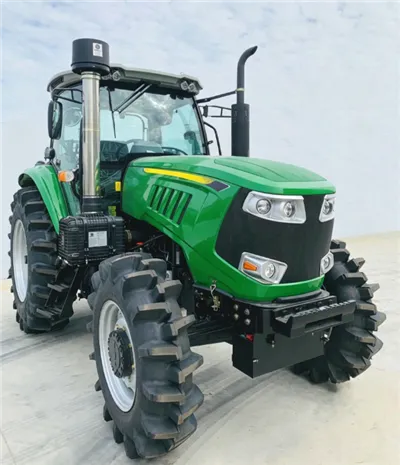

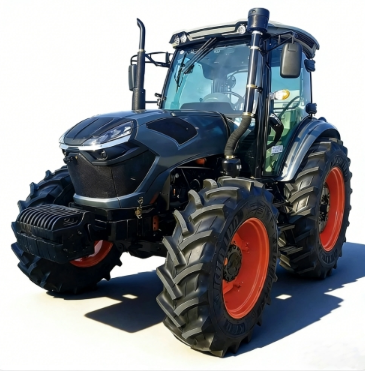


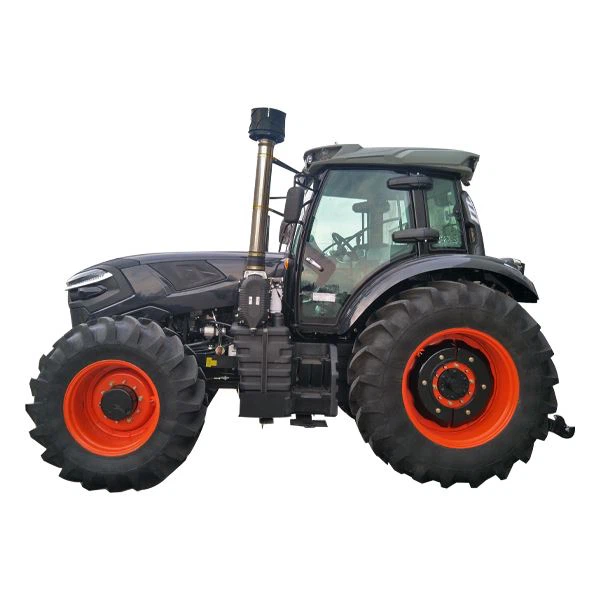
Introduction to Tractor
A tractor is an engineering vehicle specifically designed to deliver a high tractive effort (or torque) at slow speeds, for the purposes of hauling a trailer or machinery such as that used in agriculture, mining or construction. Most commonly, the term is used to describe a farm vehicle that provides the power and traction to mechanize agricultural tasks, especially (and originally) tillage, and now many more. Agricultural implements may be towed behind or mounted on the tractor, and the tractor may also provide a source of power if the implement is mechanised.
Lawn Tractors
As suggested by the name, lawn tractors are excellent for lawn and garden work. Lawn tractors are most suitable for residential use such as simple grass cutting and lawn care. Despite their focus being on lawn mowing, lawn tractors have other notable features, too. Some of the additional capabilities of lawn tractors with the use of specialized attachments include tilling, hauling material, and plowing snow.
Compact Tractors
A good option for large agriculture operations, compact tractors are small farming tractors with defining features such as a weight of 4,000 pounds or less, between 40 and 60 horsepower, and having a three-point hitch. The ideal compact tractor can lift over 2,000 pounds with a loader, which can range from a front loader to a backhoe. Some compact tractors have four-wheel drive and a cab, making them a great option if you need an adaptable tractor with various uses in different weather conditions and terrains.
Sub-Compact Tractors
Sub-compact tractors are smaller than compact tractors with an approximate average of 20 to 25 horsepower. These tractors typically boast two- to three-cylinder diesel engines with three-point hitches and a substantial lift capacity. This type of tractor is capable of both mid-sized yard work and agricultural production jobs, with the best sub-compact tractors built for various purposes and with features including bucket attachments and underneath mowers or pull-behind rotary mowers.
Utility Tractors
Utility tractors are very similar to compact tractors and have a lot of cross-over features, and many manufacturers make compact utility hybrid tractors that combine features of the two types. Basic utility tractors have an average of between 40 and 100 horsepower, sometimes exceeding that. Most utility models have a four-cylinder diesel engine with multiple electronic features and, occasionally on newer models, artificial intelligence systems.
Agricultural Tractors
Agricultural or row crop tractors can perform various tasks on a large scale, with specifically notable features relating to growing and cultivating crops. User-friendly and comfortable, agricultural tractors are a good option for large-scale farming operations that need a machine with multiple capabilities. Advantages of these tractors include good row-spacing features, easy attachment and detachment of implements and advanced heavy-lifting performance.
Additional Tractor Types
Although there are five main tractor types, some tractor models do not strictly fall under one of these categories, as they have combined capabilities with various attachments and additions. Some additional popular tractor types include orchard tractors, industrial tractors, garden tractors, rotary tillers and earth-moving tillers.
How Does a Tractor Work?
The working principle of tractors essentially involves transmitting the power of the engine to the wheels or tracks through power transmission components. Heart of a tractor is its engine and diesel engines are generally used in tractors.
The engine converts the energy obtained by compressing and igniting the fuel-air mixture into mechanical motion. This motion is transmitted from the engine's output shaft to the power transmission components.
Tractor control is achieved through the control console in the driver's cabin. The control console contains parts such as the accelerator pedal, brake pedal, clutch pedal, steering wheel, gear lever, and other control buttons.
Power transmission components in tractors generally consist of parts such as a hydraulic pump, clutch, transmission, rear axle, front axle and differential. These components come together to transmit power and motion to the wheels or tracks.
A tractor's movement is typically provided by the rear wheels or tracks. Power controls the rotation of the wheels through the differential. Accessories such as a tow ring or tow bar attached to the rear axle allow the tractor to pull another vehicle or move machinery.
The Benefits of Using a Tractor in Agriculture
A tractor is an agricultural vehicle that has a powerful motor and large wheels. This is commonly used on farms for a variety of purposes depending on the attachment fitted to it. Because of this, it can help you complete a list of tasks efficiently.
Doing jobs manually - such as plowing, planting, and harvesting - is exhausting especially if you’re handling a larger land. Because of this, precision is lacking or harder to achieve, which affects the quality of the produce. That’s why compared to doing tasks manually, using a tractor is a better solution as it can complete jobs with precision. As farm machinery, it can repeat the same move - such as planting rows of plants with the same distance - easily. This leads to a high-quality harvest for farmers.
When you have a larger land, this will take days as your workers need to take breaks too. With a tractor, you can use plenty of attachments and implements to make work easy. Because of this, you can tackle more work in a shorter amount of time. It’s also more comfortable to work as the operator can stay inside an enclosed cabin. Some models even have air conditioning systems, so a farmer can work for longer periods under the sun.
Working on hectares of land for a limited time is difficult without farm machinery. That’s why tractors are recommended if you want to work on larger farmland quickly. But there are options for smaller farms as well. This is because tractors are available in different sizes and capabilities, just like normal vehicles. When choosing a tractor, consider the size of your farm as this can affect the horsepower you need. For larger farmlands, it’s recommended to choose a 45 to 70 HP tractor, while smaller farms might only need 20 to 35 HP.
By using a tractor, you can reduce costs on your farm. For one, you can do more in less time, so you can lower labor expenses. You can also dedicate the saved time to other tasks. Other than that, you can use a variety of attachments with a tractor - such as a planter, harvester, and the like. You can choose the implements you need right now and save up for the other ones in the future. If your supplier offers maintenance services, it can also help you keep your tractor in the best condition so you can lower repair costs.
The basic functions of a tractor are to act as a tug and engine; they pull equipment and machinery but can also power machinery. Farming equipment and other attachments can be added to the tractor to expand the use and application of the tractor.
The functionality of a tractor depends a lot on the size and engine horsepower. With a tractor, a farmer or operator is capable of:
- Moving stone, dirt, brush, debris, or other heavy materials.
- Clear brush with rotary or flail mower attachment.
- Tilling land and preparing a garden or field.
- Repair and trade a gravel driveway or road.
- Clear roads and driveways of snow and ice with a snowblower, plow, and salting attachments.
- Assist in large landscaping projects.
- Use a backhoe attachment to dig foundations, ditches, and ponds.
- Power a variety of attachments like wood splitters, saws, and stump grinders.
- Assist with farming duties with attachments like plows, landscape rakes, rotary tillers, bale spears, and many more.

Tractor Main Parts
Engine
It is the most important part that provides power for all work of the tractor. The power produced in the engine is transmitted to the wheels and PTO by the transmission parts. So the engine is the heart of the tractor. Most four-stroke internal combustion engines are used in tractors.
Powertrain
The Powertrain, which is among the main parts of the tractor, consists of clutch, gearbox, differential and final reduction. For this reason, the transfer parts are as important as the engine of the tractor.
Clutch
Clutch is used to provide the first movement of the engine, to change gears, to equalize the speed of the engine and gearbox. The clutches therefore provide a resolvable connection between the engine and the gearbox.
Gear Box
The gear box is the part that enables the engine movement coming from the clutch to reach the wheels at the desired revolutions and speed.
Differential
For driving safety, while the tractor is cornering, the outer wheels should turn more than the inner wheels. It is the part differential that allows the outer wheels to turn more than the inner wheels.
PTO
The PTO is the part that provides motion transmission to the rotating machines. Due to the presence of tools driven by the PTO in field work, today the PTO is manufactured in two different structures, at 540 revolutions per minute or 1000 revolutions per minute.
Steering Systems
The steering system is the part that provides turning by giving direction to the front wheel of the tractor or by slowing down one of the tracks in tracked tractors. In standard type field tractors, the forward movement is only given by the rear wheels. The front wheels serve only as steering. However, in some tractors, the front wheels can also move forward.
Brake System
The brake system, which is among the main parts of the tractor, is the most important part for driving safety. Because the brake is the system that slows down or stops the tractor in motion.
Tractor Rear Linkages
Tractors have a large number of connection mechanisms for pulling and pulling tools and machines according to different usage conditions and also their targets. Tractor rear hitches are used for towing trailed implements and trailers by connecting them to the tractor.
Implements be Used With a Tractor And Their Function
Plough:Plough performs deep tillage of land to help break up the top layer, introduce new nutrients and remove weeds. Additionally, it aerates the soil and improves its ability to retain moisture to support new growth.
Seed Drill:A seed drill is used to plant seeds for crops by placing them in the ground and burying them to a certain depth. Additionally, this guarantees that seeds will be dispersed uniformly.
Happy Seeder:A happy seeder is a tractor-mounted tool for harvesting crops, lifting paddy straws, and other tasks.
Rake:A Rake is an agricultural implement machine developed for numerous horticulture tasks. However, rake machines are more useful for gardening, aerating the soil, and more.
Power Harrow:After ploughing and subsoiling, Power Harrow frequently regenerates the soil for secondary tillage.
Loader:A loader is a piece of heavy equipment to move loads such as dirt, gravel, and demolition waste.
Harvester:Dasmesh Harvester, or “combine”, is a key invention that saves cost and time. Moreover, this machine combines the three major harvesting tasks: reaping, threshing, and winnowing.
Ways To Improve Tractor Performance
Get New Tires
The tire choice of your tractor will significantly affect its performance. When choosing tires, you should consider the environment and terrain. Tires are more cost-effective to replace, repair and maintain. However, radial tires are the better choice when it comes to rough terrain. Using these tires can increase fuel economy and efficiency by reducing air pressure. In addition, they prevent wheel slippage and jamming.
Use Quality Products
Choosing the right fuel for your tractor will affect its performance. You should choose quality fluids to protect gears, clutches, pumps, transmissions, hydraulic systems and other vehicle components during production.
Best Spare Parts for Tractor Maintenance
Regarding tractor maintenance and repair, few spare parts are required. Because tractors can have a wide variety of problems. Having the right parts helps you repair or replace your equipment quickly. In addition, tractor performance can be increased with trouble-free parts. Required spare parts are as follows:
- Spare Belts
- Filters
- Oil and Fuels
Liquids And Refrigerants
To keep your equipment's engine running, you must keep its oil and fuel full. Also, many other fluids are needed for maximum tractor performance. You should always take time to check the fuel level, transmission fluid, and engine coolant each day. Adding fuel to empty tanks should also be part of your daily routine.
Bulbs
Replacing burnt-out bulbs may seem trivial. But it always works in the long run. Because tractor bulbs are designed to ensure the safety of you and those around you. Your headlights, taillights, warning lights, etc. You should check which bulbs you need and always have them at hand.
Look Under the Hood
It’s a good idea to see how things are doing under the hood every week or so - especially if you’re driving on bumpy or rough terrain. Check hoses, belts, spark plugs and tubes to make sure they’re all intact and working correctly. If anything needs repair or replacement, contact your local parts and service team right away.
Test Tire Pressure
Take a walk around your machine at the end of each day to check for any damage, punctures or excessive wear. You should also check each tire’s pressure regularly - which can help spot any leaks.
Grab the Grease
Check oil levels and lubricate your machine routinely. That could mean anytime between 200 to 1000 hours, depending on your tractor model and how often you use it. Lubricating internal parts like hinges and zerks can help reduce friction and corrosion.
Let Air Filters Breathe
Between dust, dirt and debris, it’s important to let air filters have some time to breathe. After every 50 hours or so, clean or replace filters and wipe off engine fan blades. It might just extend your tractor’s life a few years.
Keep it Clean
Working the land means getting dirty, but even tractors need to be hosed off regularly. We recommend using a power washer to clean your machine once a week to avoid any dirt buildup or rust forming - and give it a deep clean if you’re parking it for winter. You may even want to touch up dings or add a rust prevention coating to any spots you notice.
Remember Safety First
From riding your tractor to maintaining it, safety should always come first. So, it only makes sense that checking safety features like lights, indicators and switches should be a regular practice. It can even be helpful to keep spare bulbs on hand for quick switches.
Log Your Checks
If you have multiple tractors or pieces of farm equipment, log your routine checks to track the health of your fleet over time. You can compare against previous logs or just pinpoint any issues earlier on.
Factors to Consider in Choosing a Tractor
Essential Purposes
It is advisable to find the essential purposes of the tractor. Based on this, you can choose an exceptional tractor. A compact utility tractor may not make sense if you own a large farm that needs to be plowed. Likewise, a heavy-duty tractor for landscaping would be a wise choice if you need a tractor for landscaping.
Know Your Needs
The crucial step in the selection process is establishing your purpose for buying a tractor. If your tractor is meant for farming operations, you should have explicit knowledge of the soil conditions, your choice of crop, the size of your field, and the area you want to work on. Fieldwork should be prioritized, and the tractor should be selected based on the highest priority.
You Should Know the Work Requirements
Before understanding the tractor, it is essential to know about the working of the land and the area and condition of the land. The main factor to remember is that each crop requires different applications. The buyer should ensure that the tractor has all the features and specifications required for farming operations and applications.
Farm Location
Tractors are usually purchased based on the area of the farm. The size of the farm defines the most suitable type of tractor. A large farm requires a tractor with enough horsepower (>45 hp) to serve the purpose. This saves time while increasing tractor efficiency. Also, the area of the farm has a direct impact on the type of tractor. Not all farms are flat and wide enough to be mowed by compact tractors.
Comfort and Safety
Look at the comfort and safety of the tractor while buying. A few general things you can focus on are:
- Sufficient space between the pedals and fenders
- Proper design of the operator’s platform
- Seat adjustability and steering wheel
- Accessibility of controls from a standard range of reach
- Fine condition of handholds
- Visibility of panel lights
Lift Capabilities and Front Loaders
Lift capacity is possibly the most unreliable way to measure the presence of a tractor in the industry. Whether it’s a loader’s lift capacity or a three-point lift, often, the number listed isn’t the weight the tractor can lift. We recommend purchasing a loader from the same manufacturer as the tractor with the same performance as a particular model tractor. There is a trade-off between actual lift capacity and speed.
Engine
Most tractors run on gasoline or diesel fuel, with diesel engines typically offering more power than their gas counterparts. Engine power is measured in horsepower; more numbers mean more power, so intensive farming operations require a larger tractor with more horsepower. Transmission is an important feature to consider in the transmission type, as it will significantly affect the tractor’s performance.
Budget
Keeping a budget in mind narrows down the options by a fair margin. This simplifies your search and gives you more time to evaluate the available options. Also, consider tractor repair services, regular maintenance, and other expenses. In the long run, these can amount to much higher numbers. But, going cheap on the investment and buying a compact tractor would also be pointless.
How to Drive a Tractor?
Step 1: Get in your tractor and insert the key.
Step 2: Press the clutch using your left foot until it touches the floorboard.
Step 3: Push the key and turn it on with the clutch still pressed.
Step 4: Press the clutch and move the gear shifter to first gear once your tractor is turned on.
Step 5: Release the clutch slowly, and your tractor will start moving.
Step 6: Press the accelerator slowly to boost the RPMs.
Step 7: Press the clutch and move the gear stick simultaneously to change gears.
Step 8: To stop your tractor, press the clutch and locate neutral on the gear stick.
Step 9: Once done, release the clutch and press brake using the right foot. This will stop your tractor.
Tractor Safety Tips
Working with tractors can be dangerous, so it’s important to be aware of potential risks and take steps to avoid them. Here are some safety tips to keep in mind when using a tractor:
- Always wear proper protective equipment such as helmets, gloves, and eye protection when operating a tractor.
- Fasten your seatbelt before starting the tractor.
- Never stand or sit on the platform of a moving tractor.
- Do not try to repair a tractor while it is running.
- Keep your hands and feet away from moving parts.
- Be careful when attaching or detaching implements.
- Do not overload the tractor or its implements.
- Do not drive the tractor over unstable ground.
- Avoid driving during bad weather conditions, as it can cause serious accidents.
- Make sure to operate with proper lighting or in broad daylight to ensure that any obstacles can be seen properly.
- Take needed breaks to avoid over-exhaustion when driving tractors, especially during hot temperatures.
- Use safety messages and proper warning signs for workers.

Ultimate FAQ Guide to Tractor
Q: What is the definition of a tractor?
Q: What is the basic concept of tractor?
Q: Is a tractor a machine or not?
Q: What is the advantage of a tractor?
Q: What is the most important part of a tractor?
Q: What are the characteristics of a tractor?
Quick - short turning ability.
Convenient and easy handling.
Quick and easy attachment.
Essential accessories such as hydraulic controls. Three point linkage and PTO.
Q: How many gears does a tractor have?
Q: Is a tractor a simple machine?
Q: What is the useful life of a tractor?
Q: What to do before starting a tractor?
Q: How do you stop a tractor?
Apply the brakes evenly.
Disengage the PTO.
Lower all hydraulically powered equipment to the ground.
Put the gearshift lever in park or neutral and set the brakes.
Turn the ignition key off and remove it to prevent tampering or release of energy.
Q: How do you start a tractor?
Q: How many wheels does a tractor have?
Q: How is it known that a tractor is in good condition?
Q: What is a 4 wheel tractor?
Q: What gear is used in a tractor?
Q: Does a tractor have a clutch?
Q: What is high and low in tractor?
Q: Do tractors have motors or engines?
Q: How efficient is a tractor?
We're professional tractor manufacturers and suppliers in China, specialized in providing high quality products and service. We warmly welcome you to wholesale high-grade tractor made in China here from our factory. For price consultation, contact us.
Farm Tractor with Front End Loader, 2 Wheel Walking Tractor, Medium Tractor