

Tractor Horsepower vs Drawbar Pull: Higher Horsepower Does Not Equal Greater Traction
Oct 13, 2026
Horsepower only sets the theoretical upper limit of power
Tractor diesel engines deliver two critical outputs: power and torque. Engine horsepower defines the power reserve, governing maximum travel speed and sustained working capacity, acting as a theoretical performance ceiling. Torque is the direct contributor to drawbar pull. Low‑speed high‑torque diesel engines perform far better under heavy‑load traction farming tasks.
Even with high horsepower, power cannot convert to forward pulling force without proper ground grip. If you lift drive wheels off the ground and rev the engine, wheels spin freely yet produce zero forward thrust. This extreme case illustrates: poor tire‑ground adhesion renders high horsepower completely useless.
Gear ratio & transmission efficiency determine usable wheel power output
Engine torque travels through gearbox, drive shaft, final drive and differential before reaching drive tires. Given fixed engine torque, transmission efficiency and tire radius, higher overall gear ratio brings higher wheel‑end torque and stronger theoretical drawbar pull; lower gear ratio reduces theoretical traction capacity.
The transmission system inevitably consumes part of engine power. Power‑shift and continuously variable transmission (CVT) tractors feature lower power loss and deliver more usable power to drive wheels for field work.
Tire ground grip is frequently the bottleneck limiting drawbar pull
In real‑world farm work, tractors fail to pull implements not always due to insufficient horsepower, but from tire slippage caused by poor ground grip, wasting engine power on spinning wheels.
The agriculture industry references the K‑value (minimum specific operating mass), calculated by dividing minimum operating weight by rated engine power. A low K‑value represents the classic "big engine on a light chassis" configuration, highly prone to wheel slippage. Besides total machine weight, front‑rear axle weight distribution matters greatly. Add front counterweights for heavy rear‑mount implement jobs so all four tires contribute to ground adhesion.
Tire specification, air pressure and soil conditions shape adhesion limits
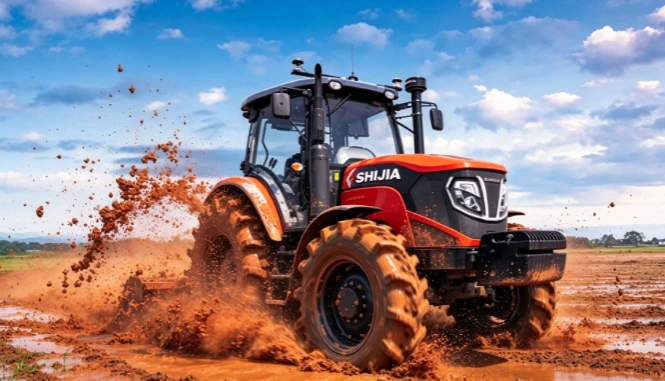
Tires form the only contact interface between tractor power and farmland ground. Larger‑diameter, wider tires create bigger contact patches for superior adhesion performance. Select tire tread patterns matched for dry farmland or paddy field applications; mismatched tread design will drastically cut traction performance. Radial tires generally deliver better traction efficiency than bias‑ply tires.
Improper tire pressure hurts field performance. Too‑low tire pressure increases rolling resistance and risks tire damage; excessive air pressure shrinks ground contact area and triggers slippage. Soil conditions create big performance variables: dry firm loam offers high adhesion coefficient. Wet mud, paddy fields and sandy ground deliver low adhesion. The same tractor can show nearly double drawbar pull difference across different soil types.
Wheel slip ratio, 2WD / 4‑WD drive mode & rolling resistance
Tractors have an optimal wheel‑slip working range: 15%‑20% for bias‑ply tires, 8%‑12% for radial tires. Excess slip wastes power through spinning tires. Insufficient slip raises rolling resistance and lowers overall traction efficiency.
4‑wheel‑drive (4WD) tractors apply full machine weight for ground adhesion, delivering noticeably stronger pulling capacity versus 2‑wheel‑drive (2WD) models. Uphill terrain, soft muddy ground and heavy implement drag consume power and reduce effective available drawbar pull.
Final Summary
Engine horsepower sets the theoretical maximum power output your tractor can produce. Real usable pulling power is capped by chassis weight, counterweight setup, tire configuration, inflation pressure and field soil conditions.
When evaluating whether a farm tractor has real working strength, do not only look at printed horsepower figures on the nameplate. Pay close attention to chassis weight, tire specifications and actual field operating conditions - these factors decide whether advertised horsepower can be effectively transferred onto farmland soil.


